 In the CityIn the City
Photo: Spacekid, общественное достояние (CC0) · source
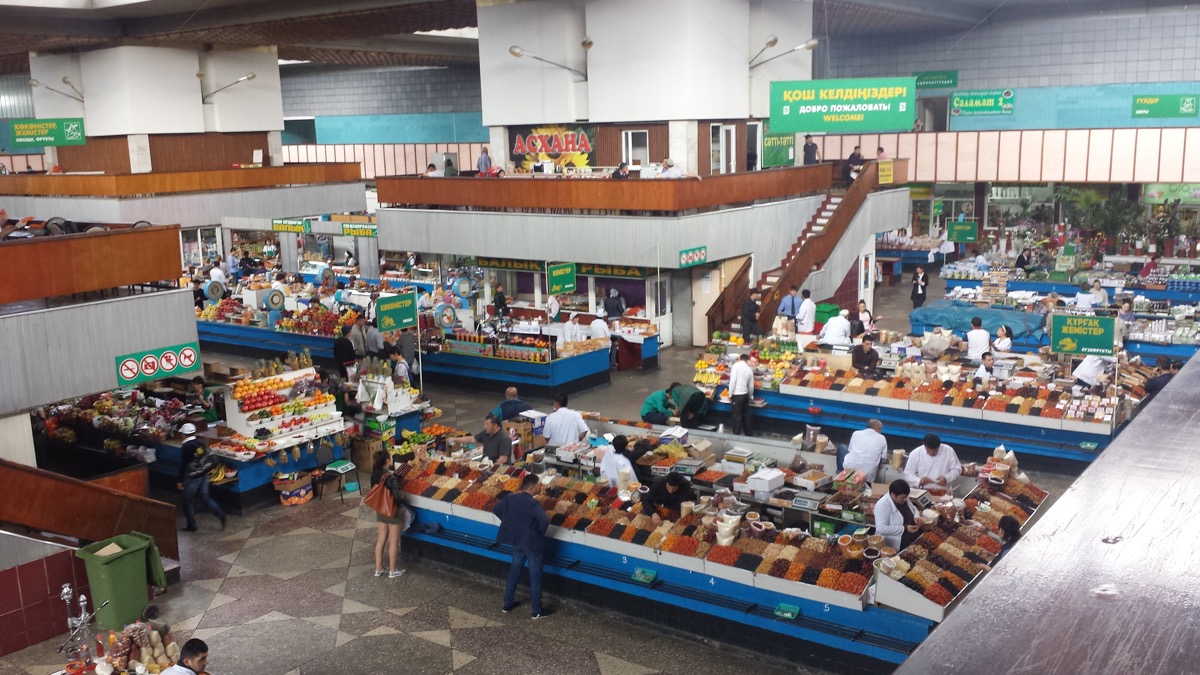
Green Bazaar is not an open-air museum, but a living, bustling market: mountains of dried apricots and apricot leather, kazy and horse sausage, loose spices and fresh flatbreads. People come here not so much for souvenirs, but for authentic gastronomic Almaty — to taste, haggle, and take home things you won't find in a supermarket. The market operates every day except Monday, which is a sanitary day for almost all vendors inside. The easiest way to get there is by metro: Zhybek Zholy station — then a ten-minute walk, or by any transport to the Zelyony Bazaar stop on Zhybek Zholy Avenue.
A trading area appeared at this location in 1868 — back then it was simply a square formed by four streets of the old city of Verny: Kuldzhinskaya, Torgovaya, Pervogildeyskaya, and Bulvarnaya. Today these are Makatayev, Zhybek Zholy, Zenkova, and Pushkin Streets. In 1875, architect Jan Koziell-Poklevsky built a "Gostiny Dvor" (merchant's yard) here — two low pavilions along Torgovaya Street, commissioned by the influential Semey merchant Rafikov. The merchant's yard served as a stopover for traveling merchants and caravans passing through the city, while local traders opened their shops here. The current market building dates from the late Soviet period and was designed to withstand local snowy winters. But the place itself has remained unchanged for nearly a century and a half: Green Bazaar is considered the oldest operating market not only in Almaty, but throughout all of Kazakhstan.
Inside, the bazaar is organized by sections: meat with fresh lamb, beef, and horsemeat in one area, dairy products with kurt and all types of cheese in another, dried fruits and nuts in yet another. The famous Almaty apples, apport variety, if in season, should be sought here rather than in a supermarket. A particular pride of the bazaar is the row with Korean salads: marinated carrots, fern, eggplant with garlic. This is a legacy of the Korean diaspora. In September 1937, approximately 173,000 ethnic Koreans were deported from the Far East to Kazakhstan and Central Asia. Since then, Korean cuisine has become firmly established in the local gastronomic tradition. The market spans more than one floor — it's worth checking upstairs, where there are additional sections. There are also non-food items — clothing, dishes, household goods, souvenirs — but it's really worth coming here for the food. The best time to visit is in the morning, when the stalls are freshly stocked and the selection is at its best.