 MuseumsMuseums
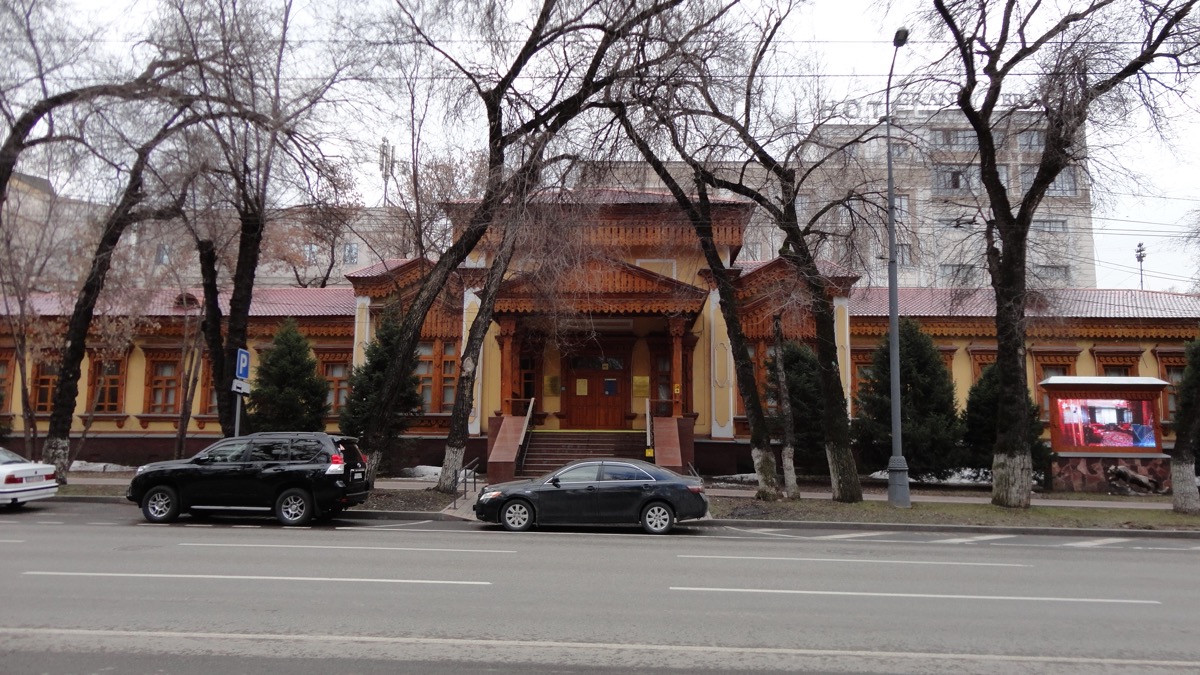
Photo: Commons-пользователь «0100», CC BY-SA 4.0 · source
The Almaty Museum is situated on Kabanbay Batyr Street, 132, in a beautifully restored building that deserves a visit for its facade alone. The exhibition is designed as a journey through time: 11 different epochs of the city unfold one after another, from ancient settlements to the present day. The collection contains over 40,000 exhibits in total. Even lifelong Almaty residents typically discover something new about their own city here. Since August 2017, the museum operates under the "Museum for All" program, offering adapted tours for visitors in wheelchairs and people with visual or hearing impairments. Plan to spend at least one and a half to two hours viewing the displays — there is genuinely a lot of material to see.
The museum building was constructed in 1892 according to a design by architect Paul Gourdon for the Vernoe Orphanage, which had opened as early as 1878. Today it stands as one of the best-preserved examples of civil architecture from old Vernoe. Following the 1917 revolution, the building lost its dome. During the Soviet period, it housed various institutions: in 1929 it contained the KazTsIK, the Council of People's Commissars, and the State Planning Committee of the Kazakh SSR, and from 1981 to 2016 it served as a medical school. The building underwent restoration by 2009. It received the status of historical monument in 2010, and protective zones around it were established in 2014. The Almaty Museum, founded in 2001, relocated to this complex and opened to the public at its current location in 2016.
The eleven epochs presented in the museum trace a path from ancient history and the Middle Ages through the emergence of Kazakh statehood and the ethnography of Jetisu, to the period of Vernoe, the twentieth century, and the modern era. Separate halls are dedicated to Zheltoksan — the December events of 1986 — and the era of Elbasy. Another exhibition line explores the history of Almaty mountaineering: the city is aptly called the city at the foot of mountains. Since 2006, the museum's structure has included another site — the "Boralday Saka Burial Mounds" archaeological park located on the northwestern outskirts of the city near the airport. This is a genuine burial mound necropolis covering 430 hectares, with 47 Saka and Wusun kurgans, the largest of which stands 14 meters high with a diameter of 100 meters. The park features a life-size cross-section of a kurgan and a reconstruction of a Saka dwelling, allowing visitors to glimpse the lifestyle of ancient nomads not merely through informational plaques. In the halls on Kabanbay Batyr Street, holograms complement some of the exhibits, projecting images of rare artifacts in their nearly original condition without removing the fragile originals from storage. The museum and archaeological park are best visited on separate occasions — each site offers enough impressions for its own dedicated visit.