 MuseumsMuseums
Photo: Interfase, Public Domain · source
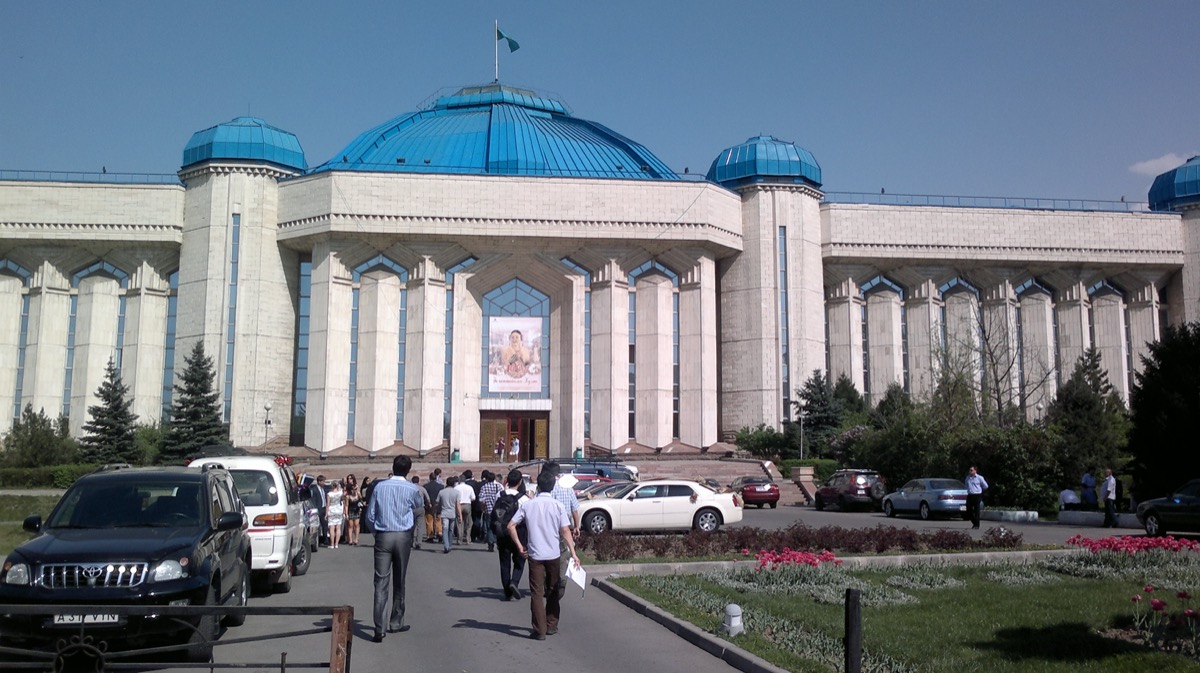
The Central State Museum of Kazakhstan is located in the Samal-1 neighborhood, 44. It is the most visited museum in the country, featuring approximately 300,000 exhibits dedicated to the history and culture of Kazakhstan spread across seven halls. Here you can follow the entire historical narrative hall by hall—from paleontology and archaeology to ethnography and history from ancient times to the present day. The collection is so vast that visitors typically see only a portion during a single visit, which is why many return multiple times. The museum is open from Wednesday to Monday, 9:00 to 18:00, with Tuesday being the closing day. On January 30, 2025, the museum was granted national status by presidential decree.
The museum traces its origins to 1920, when a government decree established the Kazakh Central Regional Museum within the Kyrgyz—as Kazakhstan was then called—Autonomous Soviet Socialist Republic. Part of its collection was transferred from the Orenburg Regional Museum, which served as the republic's capital at that time. When the capital moved to Alma-Ata in 1929, the museum relocated there as well, and its collection was enriched by materials from the Zhetysu, or Semirechye, Regional Museum. The museum opened to the public in 1931. Initially, the exhibits were housed in the building of the Voznesensky Cathedral. In 1941, the collection of the Republican Anti-Religious Museum was incorporated into the museum's holdings—such institutions were commonly opened in former religious buildings during the Soviet period as part of atheist propaganda efforts. In 1944, the museum received its first-class status and its current name. The building where the museum operates today was constructed between 1978 and 1985 according to a design by architect Zh. Mustafina and the Kazgorstroyproekt institute.
The seven halls of the museum progress from paleontology, featuring remains of prehistoric animals, fossilized trees and other ancient plant life, through archaeology and ethnography to the history of Kazakhstan in the modern and contemporary periods. There is a dedicated hall on the Kazakh diaspora and the Great Patriotic War, as well as a separate anthropological hall. The most spectacular is the "Archaeological Gold of Kazakhstan" hall, which showcases Scythian gold in the "animal style," including discoveries from the Chiliktin and Second Pokrovsk kurgans. Also displayed here are some materials from the Issyk kurgan, the site where the famous "Golden Man" was discovered. It is precisely this breadth—spanning from ancient animals to Scythian-era gold and twentieth-century history—that makes this museum the most visited in the country. School groups bring their students here for their first museum tour, and tourists come to experience the entirety of Kazakhstan's story in a single morning.