 MuseumsMuseums
Photo: Ds02006, Public Domain · source
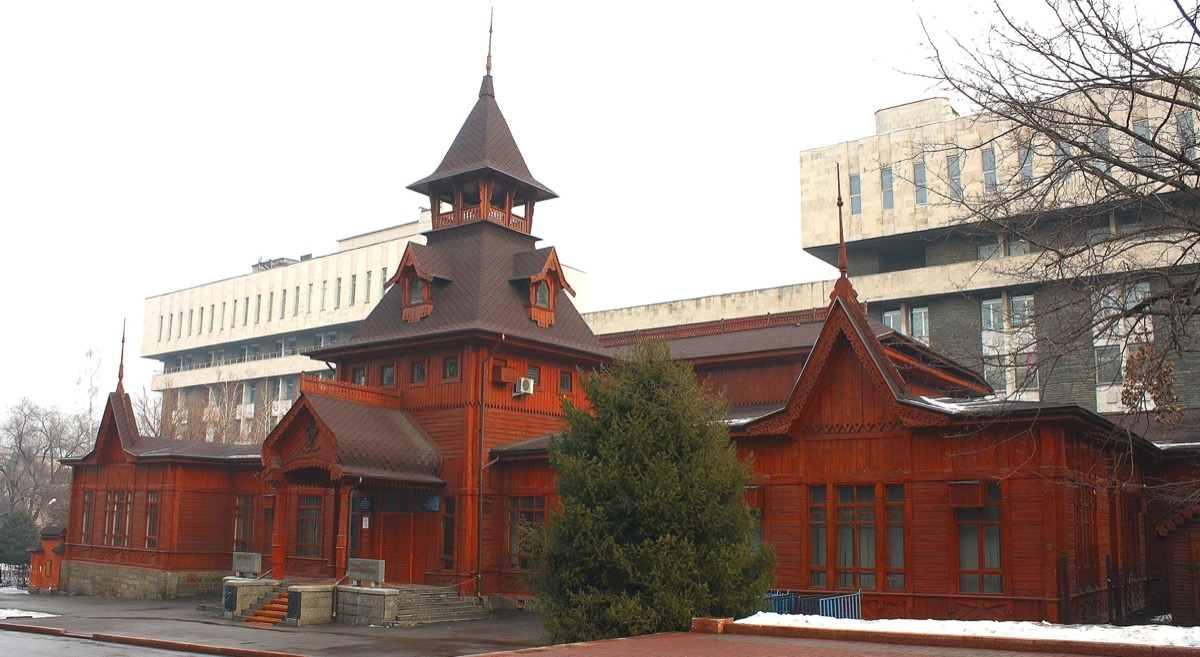
The museum stands on Zenkova Street, 24a, just a short distance from the Military History Museum — and this proximity is no coincidence, explained in the following section. From a collection of two thousand items, 297 exhibits are displayed across nine halls: personal dombyras belonging to Abay, Zhambyl and Makhambet, as well as Amre Kashaubaev, Dina Nurpeisova, and Nurgisy Tlendiyev. Nearby you'll find rare instruments such as the zhetygen and sybyzgy, plus over 40 types of Kazakh folk instruments in total, along with instruments from approximately fifty cultures worldwide. It's a small museum, but one filled with truly unique pieces you won't see anywhere else. Since March 2026, the museum operates on an expanded schedule: Tuesday through Sunday it's open from 10:00 AM to midnight, with Monday reserved as a sanitation day. For a museum of this profile, evening hours are quite unusual.The museum opened on April 24, 1981. The decision to establish it was signed by the republican Council of Ministers a year earlier, on August 1, 1980. Initially, the museum occupied the former home of elder Seidalin, and in 1983 it relocated to the Zenkova Street building — a wooden Officers' House of the Central Asian Military District, built in 1908 by engineer Andrey Zenkov. Previously, the Military History Museum had occupied this same building: it had been there since 1965 and only moved to a nearby new building in 1978, freeing up space for the future instruments museum. The museum was named in 1990 in honor of Ikhlas Dukenuly, a kobyz player and kuyshi, one of the founders of the school of kobyz playing. Ikhlas was born in 1843 into a family of hereditary masters: his grandfather Altynbek was a jeweler and blacksmith who crafted musical instruments himself, while his father Duken was renowned as a virtuoso kuyshi and became his first teacher. Ikhlas revived and developed the tradition of kobyz playing, which according to legend traces back to the legendary Korkyt. He composed kuys based on traditional epic and lyrical poems, including