 MuseumsMuseums
Photo: Davide Mauro, CC BY-SA 4.0 · source
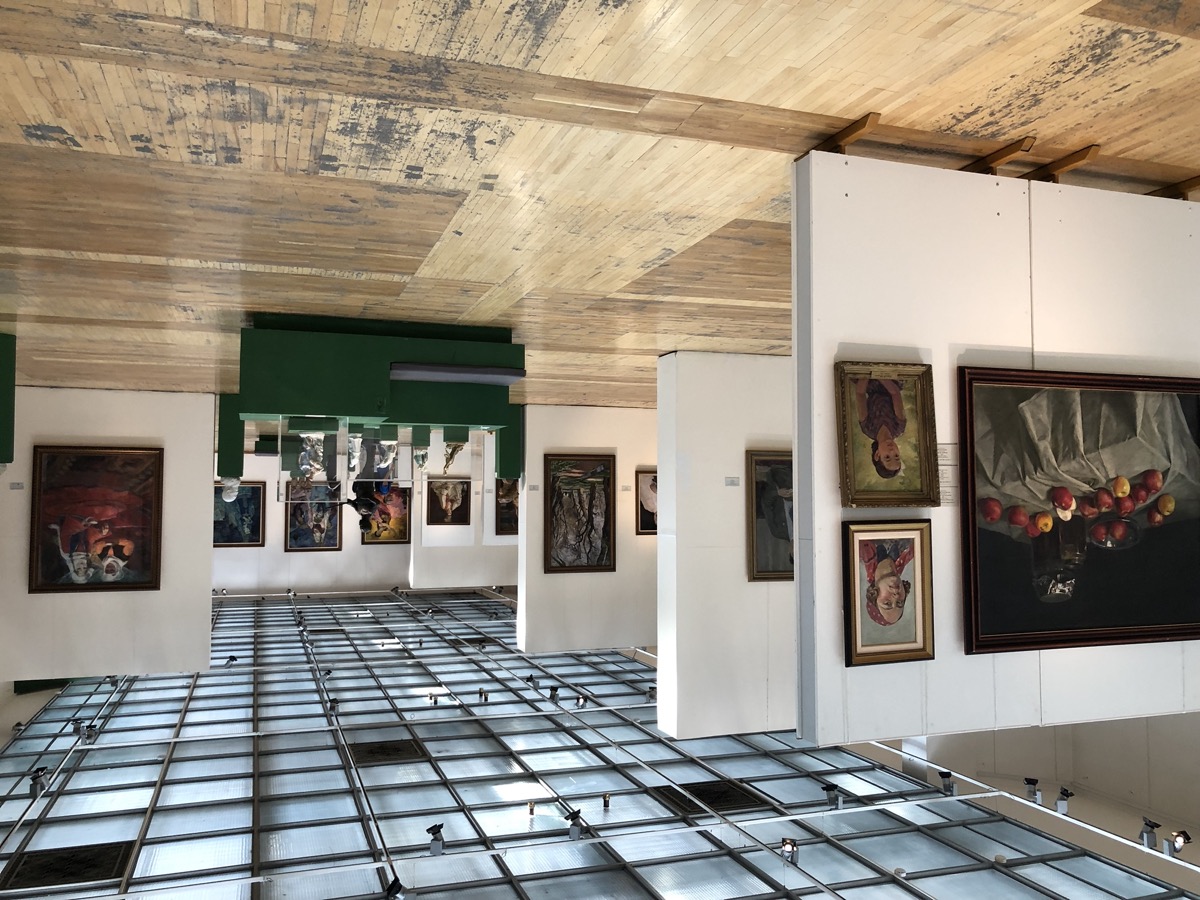
Kasteev is the largest and oldest art museum in Kazakhstan, and this is no exaggeration: the collection unfolds gradually, gallery by gallery, and you should plan to spend two to three hours exploring the entire museum. It stands in Koktem, a residential area just a few minutes from central Almaty. In January 2026, the museum reopened after a major renovation: the roof and internal spaces were updated, floors were replaced, and climate control was installed for the first time. The museum is open from 10:00 to 18:00, with the ticket office closing at 17:30. Adult admission costs 2000 tenge, students and pensioners pay 500 tenge, while war veterans, people with disabilities, and preschoolers enter free of charge. Keep in mind the sanitary day: it is the last day of each month, when the museum is closed.
The museum's history began in 1935 with an exhibition marking the 15th anniversary of the Kazakh SSR. Based on this exhibition, the Kazakh State Art Gallery named after Shevchenko was established, which also incorporated the collection from the first art exhibition of Semirechie in 1925. In 1970, the Museum of Folk Applied Art opened separately in Alma-Ata. On September 16, 1976, both collections were united into the State Museum of Arts of the Kazakh SSR, and that same year the museum moved to its current building—its atrium was designed based on traditional Kazakh architecture. The museum was named after Abylkhan Kasteev, Kazakhstan's first professional artist, in 1984. The reopening after renovation in January 2026 coincided with two major anniversaries—the museum's 90th year and the 50th anniversary of the building in which it is located.
Abylkhan Kasteev is a figure worth visiting the museum's memorial hall to learn about. He was born in 1904 in an aul in Semirechie, in the family of a poor herder. His father died early, and the boy herded livestock himself and later worked as a laborer on the Turksib railway construction project. He taught himself to draw. Only in the late twenties did he begin studying in Alma-Ata at the studio of Russian artist Nikolai Khludov. The turning point came in 1934: his works submitted to a competition dedicated to Abai were noticed, and he was given the opportunity to study in Moscow. Kasteev became the founder of Kazakh easel painting—before him, decorative and applied forms dominated Kazakh art, but he was the first to paint landscapes, portraits, and genre scenes. The artist died in Alma-Ata in 1973.
Today the museum's collections contain more than 26,000 items: Kazakhstani, Russian, Western European, and Eastern paintings, graphics, sculpture, and applied art. A particular source of pride is the collection of foreign art, the largest in Central Asia: approximately 7,500 works from Russia, Italy, France, Holland, Flanders, Germany, and England, as well as decorative and applied art and graphics from India, China, Korea, and Japan. Of the museum's 14 halls, 11 are dedicated to the permanent exhibition, while three are reserved for temporary exhibitions and retrospectives. After the renovation, new sections have been added: graphics by Yevgeny Sidorkin, the exhibition "Female Images in Kazakh Art," and an expanded section on the art of independent Kazakhstan.
However, visitors often come to Almaty specifically for one name—Sergei Kalmykov. He was born in 1891 in Samarkand and was a painter, graphic artist, set designer, and writer—spending almost his entire life in Alma-Ata, where he died in 1967. Kalmykov was the only master of the Silver Age who lived into the late sixties, and over those years he developed his own distinctive style, unlike anything else, known as "fantastic expressionism." After the artist's death, his works were first transferred to a state archive and then to the museum's collection, which now houses more than 1,100 of his paintings: one of the world's largest collections of works by a single avant-garde artist.
Also worth viewing nearby are the sculptures of Isaak Itkind—the museum has 19 of them. Itkind was born in 1871 in the town of Smorgan, received a religious education and became a rabbi, but took up sculpture as an adult. From 1938, he lived in Kazakhstan and carved expressive, angular figures from wood—among them sculptural portraits of Dzhambul, Amangeldy, and Abai. From 1956, Itkind worked at an Almaty theater: by day he painted sets, and at night, in the basement of the same building, he carved wood. He died in Alma-Ata in 1969. Today his works are housed not only here but also in the Russian Museum and the Hermitage—a proximity that speaks volumes about the scale of his talent.
For your first visit, an audio guide will be helpful: recordings are available in the Visit Almaty app and will help you navigate the museum's fourteen halls.